AI Model
Fine-Tuning Services for Custom LLM Performance

Fine-tune large language models with your business data to improve response quality, reduce hallucinations, and deliver accurate domain-specific results. Our AI model fine-tuning company customizes and develops AI models to perform accurately for your specific business tasks, data, and workflows.

Cognitive Task AutomationDomain-Specific Model Training Clear Ownership of Data and ModelsEnsure reliable performance in real-world Continuous Learning & Feedback Loops2x Model accuracy

Contact Us

    Our Valued Customers

    Improve AI Performance with Our AI Model Fine-Tuning Services

    At Gen AI India, we help businesses adapt large language models and other AI systems to their specific use cases through structured AI model fine-tuning. Here are our end-to-end fine-tuning generative AI model services.

    AI Model Fine-Tuning Consulting

    Our generative AI consulting services team evaluate your current AI usage, datasets, workflows, and business goals to determine whether fine-tuning, prompt optimization, or hybrid architectures such as RAG will be most effective for your operational needs.

    Custom Dataset Preparation & Training

    AI model fine-tuning success largely depends on the quality of the training data. We help organize, label, and structure this information so the AI model learns the patterns, terminology, and decision logic that are relevant to your industry, business scenario, and domain

    LLM Fine-Tuning & Model Adaptation

    By training the model on targeted datasets, our Gen AI model fine-tuning services team improve its ability to understand domain-specific tasks, maintain consistent output formats, and generate responses aligned with your business processes.

    AI Model Optimization & Evaluation

    We conduct performance evaluations using real-world test scenarios and benchmark datasets. This process helps measure improvements in accuracy, response consistency, and reliability to ensure the tuned model performs well in production environments.

    Integration with Existing AI Systems

    Whether the model supports chatbots, document processing, analytics, or automation systems, our integration ensures the fine-tuned AI operates smoothly with your current infrastructure, workflows. applications, internal tools, or customer-facing platforms.

    Ongoing Monitoring & Model Improvement

    AI models require continuous monitoring to maintain performance over time. Our team provides ongoing support to track model outputs, identify areas for improvement, and update training data when necessary to ensure system continues to deliver accurate response.

    Solve Your AI model fine-tuning Challenges

    Have a chat with our ai model fine tuning experts

    Let’s Discuss Your Problems

    Why Do Businesses Often Struggle with AI Model Accuracy?

    Executive Pain Point

    Many organizations deploy AI systems but struggle with inconsistent outputs, hallucinations, or models that fail to understand domain-specific language.

    Domain Knowledge Gap

    Generic AI models lack the context of your internal documents, terminology, and processes, leading to incomplete or inaccurate responses.

    Data Preparation Challenges

    Preparing clean, labeled datasets suitable for model training requires significant effort and expertise.

    High Infrastructure Costs

    Training and tuning models can require specialized hardware and infrastructure that many organizations do not maintain internally.

    Model Evaluation Complexity

    Without structured testing and evaluation frameworks, businesses often struggle to measure improvements in model performance.

    Continuous Model Maintenance

    AI systems require ongoing updates and monitoring to remain accurate and aligned with changing data and business workflows.

    Flutter API Integration Services

    AI Model Fine-Tuning Solutions We Implement

    Our AI fine-tuning services use proven machine learning methods and model optimization techniques that improve performance for real-world applications.

    Supervised Fine-Tuning

    Parameter Efficient Fine-Tuning (LoRA / QLoRA)

    Domain-Specific Dataset Training

    Retrieval-Augmented Generation (RAG)

    Reinforcement Learning from Human Feedback (RLHF)

    Model Distillation

    Prompt Optimization

    Supervised Fine-Tuning

    Large Language Models

    With supervised fine-tuning we train AI models using structured input–output examples relevant to your business tasks. This helps the model learn the correct responses, formats, and decision patterns so it can generate more accurate, consistent, and reliable outputs for real-world applications.

    Text-to-Image Models

    Using parameter-efficient techniques such as LoRA and QLoRA, we fine-tune large AI models without retraining the entire network. This approach reduces computational costs while enabling models to adapt to domain-specific tasks with improved efficiency and scalability.

    Speech & Audio Models

    We train AI models using datasets built from your organization’s documents, conversations, and operational data. This helps the model understand industry terminology, internal knowledge, and business context so it can deliver more relevant and domain-aware responses.

    Video Generation Models

    RAG connects AI models with external knowledge sources such as document repositories, databases, or internal knowledge bases. This allows the model to retrieve relevant information in real time and generate responses that are accurate, context-aware, and grounded in trusted data.

    Multimodal Models

    RLHF improves AI model behavior by incorporating feedback from human reviewers during the training process. This helps the model learn preferred responses, reduce errors, and align outputs with business standards, policies, and expected user interactions.

    Code Generation Models

    Model distillation transfers knowledge from a large, complex AI model into a smaller and faster model while maintaining strong performance. This makes it easier to deploy AI systems in production environments where speed, efficiency, and lower infrastructure costs are important.

    Code Generation Models

    Prompt optimization improves the way instructions and inputs are structured when interacting with AI models. By refining prompts and response formats, we help systems produce clearer, more accurate outputs while reducing unnecessary tokens and improving overall performance.

    Code Generation Models

    Supervised fine-tuning helps the model learn how to respond correctly by training it on examples of input-output pairs from your business environment. This process improves response accuracy, ensures consistent output formats, and aligns AI behavior with organizational standards.
    Benefits of Fine-Tuning a Generative AI Model

    As a leading AI model fine-tuning company, our clients have witnessed the real-world impact of our services. Here are some of them

    Improved Task Accuracy

    Fine-tuning helps generative AI models perform specific tasks more accurately by training them on targeted datasets. This enables the model to better understand domain context, follow instructions correctly, and deliver responses that align with real business requirements.

    Better Understanding of Industry Language

    Fine-tuned models learn the terminology, phrases, and context commonly used in a particular industry. This helps the AI interpret questions, documents, and conversations more effectively while producing responses that reflect the language and knowledge of your domain.

    More Consistent and Structured Outputs

    Fine-tuning allows AI systems to generate responses in consistent formats that match your workflows and operational needs. This helps reduce variability in outputs and ensures that responses follow defined structures, templates, or reporting formats.

    Reduced Errors and Irrelevant Responses

    Training models on curated datasets helps reduce hallucinations and irrelevant outputs that often occur with generic AI models. This improves reliability and ensures the AI focuses on relevant information when generating answers or completing tasks.

    Improved Efficiency and Cost Optimization

    Fine-tuned models can perform specialized tasks more efficiently, often allowing smaller models to achieve strong results. This can reduce infrastructure costs, improve response speed, and make AI systems more practical for large-scale deployment.

    Better Alignment with Business Workflows

    Fine-tuning enables AI models to adapt to the processes, decision logic, and operational structure of your organization. This ensures the AI system works seamlessly with existing workflows, internal tools, and business objectives.

    How We Deliver Our AI Model Fine-Tuning Services

    As a leading Gen AI development company, our process begins by understanding your business use cases rather than focusing only on the technology.

    We analyze your existing AI workflows, datasets, and system architecture to determine how the model should be trained and optimized. Our approach ensures that fine-tuning supports your operational goals and improves measurable outcomes.

    Our team collaborates with technical teams, data owners, and business stakeholders to design models that deliver practical results while maintaining scalability and long-term reliability.

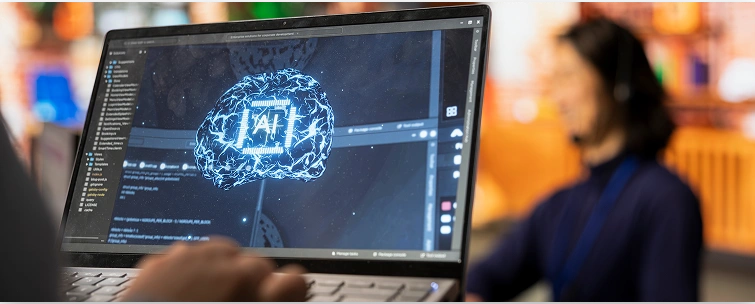
    AI Development Workspace
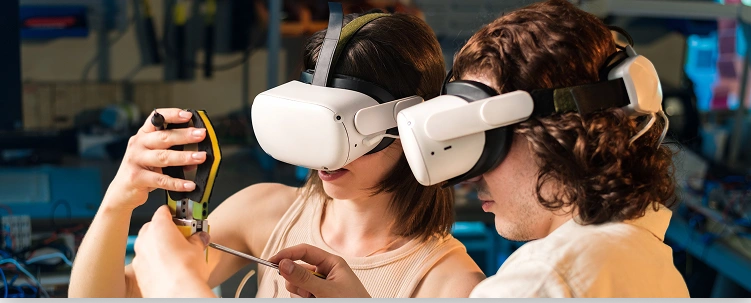
    AI Innovation Technology

    Our Structured AI Model Fine-Tuning Process

    Gen AI India follows a systematic process to fine-tune AI models efficiently while ensuring reliability, scalability, and alignment with business requirements.

    Process Image

    Use Case Identification & Model Assessment

    We begin by identifying the specific tasks the AI model needs to perform and evaluating existing models to determine the best starting point for fine-tuning.

    Dataset Collection & Preparation

    We collect relevant training data from your internal systems and prepare structured datasets that accurately represent your business use cases.

    Model Selection & Training Strategy

    Our team selects the most suitable base model and determines the appropriate fine-tuning technique based on your dataset size, infrastructure, and application requirements.

    Model Training & Optimization

    The selected model is trained on task-specific datasets while adjusting hyperparameters to improve performance without losing general language capabilities.

    Testing & Human Validation

    We validate the model using structured testing frameworks and human evaluation to ensure outputs are accurate, relevant, and aligned with business expectations.

    Deployment & Integration

    The fine-tuned model is deployed within your applications or AI infrastructure with support for scalability and real-time performance monitoring.

    Continuous Monitoring & Improvement

    We continuously analyze model outputs and update training datasets or parameters to improve accuracy and adapt to evolving business needs.

    Tech Stack Supporting Our AI Model Fine-Tuning Services

    To deliver reliable AI fine tuning solutions, we use a combination of advanced frameworks, training tools, and infrastructure technologies.

    AI Frameworks
    Generative AI Models
    Data Processing & Management
    Model Training Infrastructure
    Industries Where Our AI Model Fine-Tuning Services Deliver Value

    Our experience in fine-tuning generative ai model has supported organizations across multiple industries where domain knowledge and accurate outputs are critical.

    Healthcare AI Solutions

    Healthcare AI Solutions

    Media and Entertainment

    Media and Entertainment

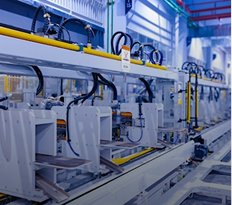
    Manufacturing AI Solutions

    Manufacturing

    Retail AI Solutions

    Retail

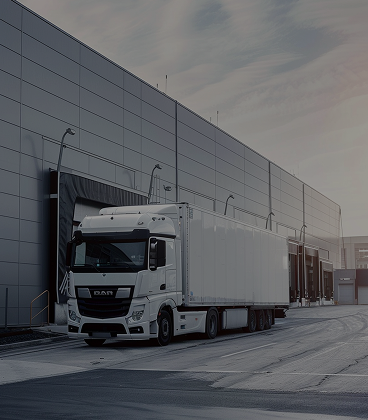
    Logistics

    Logsitics

    Ready to Improve Your AI Model Performance?

    Let's have a chat!

    Let's discover what our clients say about our projects!

    Frequently Asked Questions

    AI model fine-tuning is the process of adapting a pre-trained AI model using task-specific datasets so it performs better in a particular domain or application.

    The amount of data varies depending on the model and use case, but many models can be effectively fine-tuned with hundreds to thousands of high-quality examples.

    Prompt engineering modifies how inputs are structured for an AI model, while fine-tuning adjusts the model itself by training it on new datasets.

    The timeline can vary from a few hours to several weeks depending on dataset size, model complexity, and infrastructure requirements.