AI Agent Development Services for Intelligent Business Automation
Build AI agents that understand business context, retrieve relevant information, and execute defined tasks across enterprise systems. Our AI agent development services help businesses automate multi-step workflows, connect applications, and coordinate tasks with appropriate permissions, validation, and human oversight.
- Custom AI Agent Development
- Enterprise AI Agent Integration
- AI Workflow Automation
- Multi-Agent System Development
Where AI Agents Create Business Value
We build AI agents around practical business activities, connecting enterprise data, applications, and authorised tools to help teams complete work with less manual coordination.
Deliver Context-Aware Customer Support
We build customer service agents that retrieve order details, review authorised customer information, answer product questions, and initiate permitted service actions. Complex complaints and sensitive requests can be escalated to human representatives.
Turn Enterprise Knowledge Into Actionable Answers
We connect AI agents to approved documents, databases, and knowledge repositories so employees can retrieve policies, summarise records, compare information, and prepare research briefs. Source retrieval helps users review the information behind generated responses.
Improve Sales and Lead Management
We configure agents to qualify incoming leads, summarise account activity, prepare meeting briefs, and recommend follow-up actions. With appropriate permissions, agents can update CRM records, schedule follow-ups, and route opportunities to sales representatives.
Accelerate IT and Software Operations
We develop agents that classify support tickets, retrieve troubleshooting procedures, summarise logs, and recommend remediation steps. Restricted tool access and approval rules determine which routine actions an agent can execute and which require engineering review.
Embed AI Agents Into Business Products
We integrate agents into SaaS platforms, enterprise portals, and customer applications. The implementation accounts for user access, system compatibility, response-time requirements, and the level of autonomy appropriate for the application.
Your AI Agent Can Do More Than Answer Questions. Can It Work Within Your Business?
An AI agent needs more than a language model to complete business tasks. It requires the right context, access to approved tools, defined execution rules, and controls that determine when to proceed, validate a result, or ask for human assistance. We address six common challenges when preparing agents for business use.

1. Manual Processes Slow Down Daily Operations
Employees often spend time moving information between applications, classifying requests, updating records, and coordinating routine approvals. We develop AI agents that handle defined workflow steps and route exceptions to the right people.
2. Business Information Is Scattered Across Systems
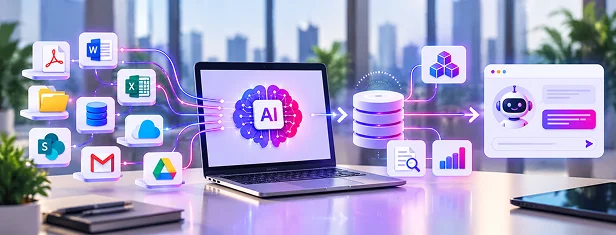
Policies, customer records, documents, and operational data often sit in separate applications. We connect agents to approved knowledge sources and enterprise systems so they can retrieve relevant context before responding or taking an authorised action.
3. AI Tools Cannot Complete Multi-Step Tasks
A chatbot may answer a question without progressing the underlying work. We build agents that break defined tasks into steps, select permitted tools, track task state, and coordinate actions under established execution rules.
4. Agents Lack Clear Boundaries for Decision-Making
Unrestricted access or unclear responsibilities can lead to inappropriate actions. We define agent permissions, business rules, approval checkpoints, escalation paths, and validation requirements according to the risk of each workflow.
5. Agent Performance Is Difficult to Measure
A fluent response does not guarantee successful task completion. We evaluate agents against representative business scenarios and track relevant measures such as task success, response quality, tool selection, failure rates, latency, and cost.
6. Enterprise Integration and Security Add Complexity
Agents must operate within existing technology environments without exposing sensitive information or bypassing established controls. We plan integrations around authentication, data permissions, secure tool access, logging, monitoring, and failure recovery.
AI Agent Development Services We Deliver
We design, build, integrate, and optimise AI agents around specific business processes. From single-purpose assistants to multi-agent systems, we define each agent’s responsibilities, tools, access permissions, and performance criteria before moving towards production.
-
We build intelligent AI agents that understand your business goals, handle complex tasks, and support everyday decisions. From customer interactions to data analysis, our agents help your teams work smarter, reduce manual effort, and focus on growth.
-
We help businesses move beyond basic automation with agentic AI that can plan, reason, and act toward defined goals. Our solutions manage multi-step tasks, adapt to changing conditions, and keep your teams in control of critical decisions.
-
We bring specialized AI agents together to solve complex business challenges. By enabling agents to collaborate, share information, and coordinate tasks, we help you manage interconnected processes, improve operational efficiency, and achieve outcomes that individual agents may struggle to deliver.
-
We equip AI agents with the tools they need to take meaningful action across your business systems. From accessing databases and calling APIs to updating enterprise applications, our solutions turn AI-generated insights into practical results while respecting your permissions and workflows.
-
We design autonomous workflows that move business processes forward with minimal manual intervention. By enabling AI systems to plan tasks, respond to changing inputs, and coordinate next steps, we help your teams reduce bottlenecks and keep operations running efficiently.
-
We help you automate repetitive, time-consuming processes by connecting AI models, business applications, and existing workflows. Our approach reduces manual effort, improves process consistency, and frees your teams to focus on strategic priorities without losing visibility or control over operations.
AI Agent Solutions for Specific Business Functions
We tailor AI agents to the responsibilities, data access requirements, and decision boundaries of each business function.
Finance and Accounting Agents
We build agents that extract invoice details, reconcile records, classify expenses, flag discrepancies, and prepare payment recommendations. Agents can route exceptions to finance professionals and require approval before sensitive transactions proceed.
HR and Employee Experience Agents
We develop agents that answer policy questions, guide onboarding, retrieve benefits information, support recruitment coordination, and route employee requests. Role-based permissions help protect confidential employee information.
Sales and Marketing Agents
We configure agents to qualify leads, summarise customer interactions, research accounts, prepare campaign briefs, and update CRM records. Teams retain review and approval over external communications and consequential commercial decisions.
Customer Service Agents
We develop agents that classify requests, retrieve order and account information, recommend solutions, and process eligible service actions. Complex complaints, unusual requests, and sensitive cases can be routed to human representatives.
IT and DevOps Agents
We build agents that investigate alerts, summarise logs, classify incidents, retrieve runbooks, and recommend remediation steps. Approved low-risk actions can be automated, while production changes remain subject to access policies and approval gates.
Operations and Supply Chain Agents
We develop agents that review inventory signals, summarise supplier communications, flag delivery exceptions, prepare procurement requests, and coordinate follow-ups across operational systems.
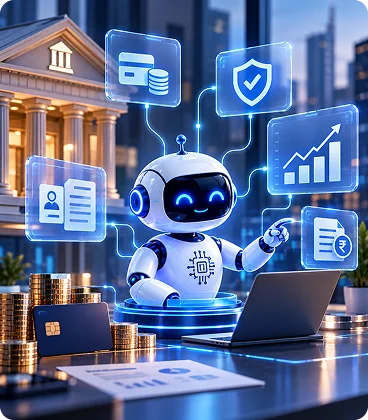
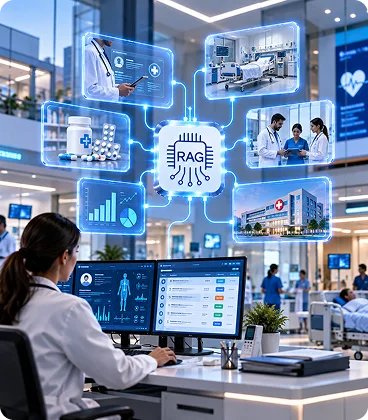
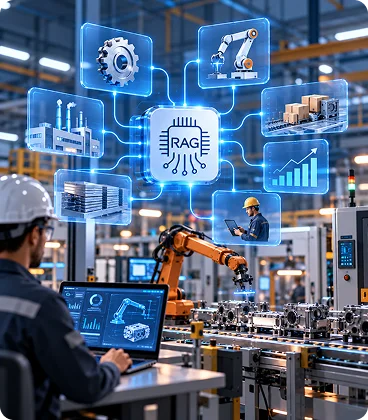
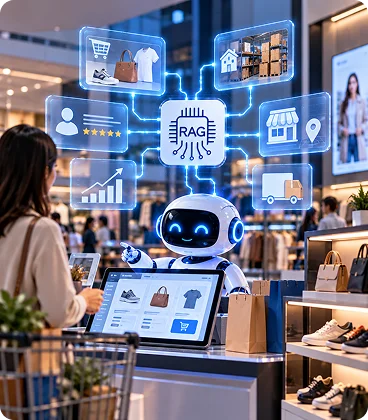
Industries We Support With AI Agent Development
We adapt agent responsibilities, system access, and oversight to the data sensitivity, operational processes, and governance requirements of each industry.

How We Deliver an AI Agent Development Project
We follow a structured delivery process that connects business objectives with architecture, development, validation, deployment, and ongoing optimisation. Each phase establishes clear requirements and deliverables before the project moves forward.
- 01
Business Discovery and Use-Case Assessment
We assess your workflows, existing applications, process bottlenecks, data readiness, and business objectives. Together, we define the agent’s responsibilities, boundaries, expected outcomes, and measurable success criteria.
Deliverable: Use-case assessment, feasibility findings, and prioritised implementation roadmap.
- 02
Agent Architecture and Technology Selection
We select suitable models, agent frameworks, retrieval methods, memory components, orchestration patterns, and integration mechanisms. The architecture reflects your requirements for accuracy, latency, scalability, security, and cost.
Deliverable: Solution architecture, recommended technology stack, and integration design.
- 03
Data Preparation and Knowledge Integration
We connect approved data sources, organise relevant knowledge, configure retrieval pipelines, and establish access permissions. We use RAG and other retrieval approaches where they support accurate access to business-specific information.
Deliverable: Data connectors, knowledge retrieval, access controls, and test datasets.
- 04
Proof of Concept (PoC) Development
We develop a focused proof of concept to test the agent against a representative business task. The PoC validates core functionality, tool access, workflow feasibility, and key technical assumptions before full-scale implementation.
Deliverable: Working PoC, evaluation findings, and recommendations for production development.
- 05
AI Agent Development and Integration
Following PoC validation, we develop the agreed agent workflows, tool-calling logic, task state management, and connections to enterprise applications. We incorporate error handling, approval points, and escalation logic into the implementation.
Deliverable: Working AI agent, tool integrations, and business workflow implementation.
- 06
Testing, Governance, and Validation
We test response quality, task completion, tool permissions, integration behaviour, and failure recovery. Security testing, regression checks, and human review help establish whether the solution meets the agreed release criteria.
Deliverable: Evaluation reports, security checks, acceptance testing, and release recommendations.
- 07
Production Deployment and Continuous Optimisation
We deploy the validated agent into the agreed environment, monitor behaviour, and track operational metrics. Feedback and execution data guide improvements to retrieval, model selection, prompts, workflows, and cost management.
Deliverable: Deployment, observability, performance tracking, and an optimisation plan.

Technology Stack for AI Agent Development
We select models, frameworks, integration mechanisms, and infrastructure based on the business use case, data requirements, technical environment, and operating constraints.
OpenAI
Anthropic Claude
Google Gemini
Pinecone
Weaviate
Qdrant
Milvus
LangChain
LlamaIndex
SharePoint
Confluence
Google Drive
Amazon S3
AI Agents vs. Traditional Automation vs. AI Chatbots
AI agents, conventional automation, and chatbots solve different types of problems. We help businesses select the approach that fits the workflow, required level of interpretation, system access, and risk.
| Factor | Traditional automation | AI chatbot | AI agent |
|---|---|---|---|
| Primary purpose | Execute predefined rules | Respond to user queries | Complete defined goals through multiple steps |
| Decision-making | Rule-based | Primarily response-oriented | Select actions within defined boundaries |
| System access | Configured integrations | Often limited or read-only | Can use authorised tools and APIs |
| Workflow handling | Fixed sequences | Conversation-led | Can coordinate multi-step tasks |
| Context management | Workflow state | Conversation context | Task state, retrieved knowledge, and configured memory |
| Human involvement | Exception handling and approvals | Escalation when needed | Configurable review and approval checkpoints |
| Best suited for | Predictable, repetitive tasks | Information and conversational support | Workflows requiring interpretation and authorised action |
What Your Business Gains From Production-Ready AI Agents
We build AI agents to support defined business outcomes, with performance criteria and operational controls established around the use case.
Less Manual Work Across Routine Processes
We automate defined tasks such as information retrieval, document classification, request routing, and record updates, allowing employees to spend more time on work that requires judgment.
Better Access to Business Information
We connect agents to approved knowledge sources and enterprise applications so teams can retrieve relevant information without manually searching across disconnected systems.
More Consistent Workflow Execution
We define agent responsibilities, validation rules, and exception-handling procedures to support consistent execution across recurring tasks.
Controlled System Access and Decision-Making
We configure permissions, action restrictions, approval checkpoints, and escalation paths according to the risk and sensitivity of each workflow.
Measurable Performance and Cost Visibility
We evaluate task completion, response quality, latency, error rates, and operating costs against a defined baseline to help teams assess the value of the implementation.
A Structured Path From Pilot to Production
We validate a focused use case through a proof of concept, review its performance against agreed criteria, and use the findings to guide production planning.
Why Choose Gen AI India for AI Agent Development?
Choosing an AI agent development company requires more than model expertise. We connect agent design with business workflows, enterprise integration, testing, security, and production operations.
Business-Led AI Agent Strategy
We begin with your business objectives and workflow requirements, then identify suitable use cases and establish evaluation criteria before development starts.
Custom Agents for Real Business Workflows
We design agents around your data, systems, users, and process requirements rather than forcing business operations into a generic agent template.
Enterprise Integration Expertise
We plan connections to existing applications, data sources, and business processes to help organisations build on their current technology investments.
Governance and Human Oversight
We incorporate access controls, action restrictions, approval checkpoints, logging, and escalation paths according to the risks associated with each use case.
Testing Before Production
We evaluate agent behaviour against representative tasks, failure scenarios, integration requirements, and security expectations before wider deployment.
Ongoing Optimisation and Support
We can extend the engagement beyond launch to include monitoring, performance evaluation, model updates, workflow refinements, and cost optimisation according to the agreed support scope.
Verified Experience and Delivery Evidence
We demonstrate our capabilities through approved company credentials, relevant team expertise, applicable certifications, and published project examples.
Frequently Asked Questions
Ready to Build AI Agents Around Your Business Workflows?
We help you assess feasibility, integration requirements, governance needs, and a practical path from proof of concept to production.