Gen AI Chatbot Development Services for Smarter Customer and Employee Experiences
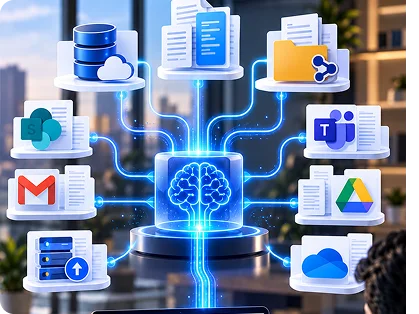
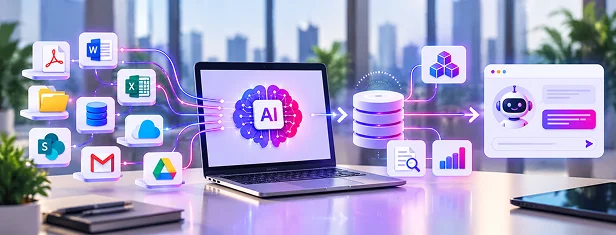
Our Gen AI chatbot development services help businesses build AI-powered conversational experiences that answer questions, retrieve business information, assist customers, support employees, and automate routine interactions. We combine large language models, enterprise data, RAG, APIs, and workflow integrations to build chatbots around your business processes.
- AI Chatbots Built Around Your Business Needs
- Context-Aware Responses Grounded in Relevant Data
- Integration With Existing Business Systems
- Secure, Scalable Conversational AI Solutions
What Can Our Gen AI Chatbot Development Services Do for Your Business?
We design and develop AI chatbots that help customers find answers, employees access company knowledge, and business teams handle routine interactions. Each solution is built around its intended users, data sources, integrations, and business objectives.
Customer Support AI
We develop AI chatbots that answer common customer questions, retrieve product information, guide users through support processes, and summarise conversations. By connecting chatbots with approved knowledge sources and support systems, we help businesses manage repetitive enquiries more efficiently.
Enterprise Chatbots
We build enterprise chatbots that connect users with business information, internal applications, and organisational knowledge. Employees can ask questions about company policies, processes, documentation, and operational procedures through a conversational interface.
AI Virtual Assistants
We create AI virtual assistants that help users find information, complete routine tasks, and navigate business services. Designed around your workflows, these assistants can connect with relevant systems and provide contextual support while retaining human oversight for important actions.
Conversational AI Solutions
We develop conversational AI solutions that interpret user intent, maintain relevant context, and generate useful responses across digital channels. From customer engagement to employee assistance, we tailor chatbot experiences to your audience, business requirements, and integration needs.
Knowledge Chatbots
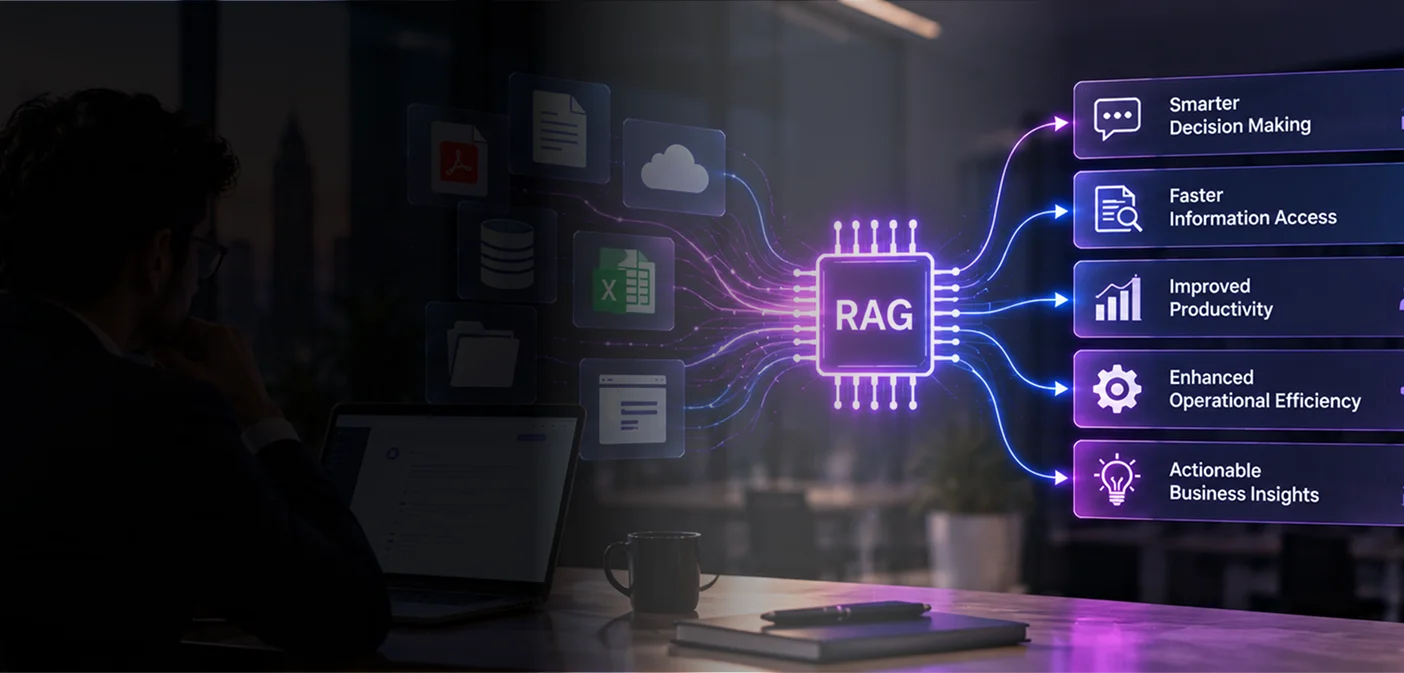
We build knowledge chatbots that help users retrieve information from documents, policies, product guides, and internal repositories. Using Retrieval-Augmented Generation (RAG) and suitable access controls, these chatbots can generate responses grounded in approved information sources.
Sales Chatbots
We develop sales chatbots that answer product questions, qualify leads, recommend relevant offerings, and guide prospects towards the next step. With suitable CRM integrations, these solutions can help sales teams manage enquiries and maintain visibility into customer interactions.
Internal Employee Assistants
We create internal AI assistants that help employees access HR policies, IT documentation, workplace procedures, and company resources. By simplifying information retrieval and routine requests, these assistants help teams spend less time searching and more time on their work.
What Makes Gen AI Chatbots Different From Traditional Chatbots?
Gen AI chatbots go beyond predefined conversation flows by using language models to interpret requests and generate responses based on instructions and available context. The right architecture depends on how much flexibility, data access, and task support your business needs.
From Scripted Replies to Context-Aware Conversations
Traditional chatbots often follow predefined rules, decision trees, or intent-based flows. Gen AI chatbots can interpret a broader range of natural-language questions and generate responses that reflect the conversation and relevant information.
Business Knowledge Without Manual Searching
A chatbot connected to approved company data can help users retrieve answers from documents, knowledge bases, and business systems. RAG can provide relevant context at query time without requiring every information update to be built into the model itself.
Connected Conversations Across Business Systems
With suitable integrations, chatbots can retrieve records, look up information, create support requests, or initiate approved workflows. Actions that affect customer accounts or business records should use authentication, permissions, and validation controls.
Human Oversight Where It Matters
Gen AI chatbots can handle routine interactions while routing complex, sensitive, or low-confidence requests to the appropriate person. Escalation rules and clear boundaries help teams manage situations that require human judgement.
Why Are Businesses Moving Beyond Traditional Chatbots?
Traditional chatbots can be useful for structured enquiries, but they may struggle when users ask questions in different ways, require contextual answers, or need information from multiple sources. Gen AI chatbot development helps address these gaps through language understanding, retrieval, and system integration.

Customers Get Stuck in Repetitive Conversation Flows
Rigid menus and predefined responses can make it difficult for customers to explain their needs naturally. We build conversational experiences that interpret varied questions and provide relevant responses based on the available context.
Support Teams Handle the Same Questions Repeatedly
Questions about products, services, policies, orders, and account processes can consume significant support time. We develop chatbots that retrieve approved information and assist with routine enquiries, allowing human agents to focus on cases that need closer attention.
Company Knowledge Is Scattered Across Systems
Employees may need to search several documents, portals, and applications to find one answer. We connect chatbots to relevant knowledge sources so users can ask questions conversationally and retrieve information from authorised systems.
Chatbots Cannot Respond Beyond Predefined Rules
Traditional systems may fail when a request does not match an anticipated intent or conversation path. Gen AI enables more flexible language-based interactions, with guardrails and fallback behaviour to manage unsupported requests.
Sales Teams Lose Time Qualifying Routine Enquiries
Sales representatives often spend time answering basic product questions and collecting initial lead information. We develop sales chatbots that assist with product discovery, lead qualification, and enquiry routing based on defined business rules.
AI Pilots Struggle to Fit Into Daily Operations
A chatbot may perform well in a demonstration but fail to deliver value if it lacks reliable data, integrations, clear ownership, or adoption planning. We define the use case, validate chatbot behaviour, and plan deployment around actual user needs.
What Can You Build With Our Gen AI Chatbot Development Services?
We develop chatbot solutions for customer-facing and internal business use cases, from conversational knowledge access to AI-assisted service workflows. Each solution is designed around its intended users, information sources, integrations, and operational requirements.
-
We build customer support AI solutions that answer common queries, guide users through troubleshooting, and retrieve relevant information. By connecting chatbots with support systems, we help businesses improve response handling and simplify customer interactions.
-
We develop enterprise chatbots that connect employees with business information, internal systems, and operational resources. Our solutions help teams retrieve relevant data, navigate routine processes, and access organisational knowledge through secure, natural-language conversations.
-
We create AI virtual assistants that help users find information, manage routine tasks, and navigate business services through natural conversations. Designed around your workflows, these assistants support productivity while keeping users in control of important actions.
-
We build conversational AI solutions that understand user intent, maintain relevant context, and deliver meaningful responses across digital channels. From customer engagement to employee support, we tailor each experience to your audience, business objectives, and integration requirements.
-
We develop knowledge chatbots that make company information easier to find across documents, policies, product guides, and internal repositories. Using suitable retrieval methods, our solutions provide relevant answers grounded in approved knowledge sources and access permissions.
-
We build sales chatbots that answer product questions, qualify leads, recommend relevant offerings, and guide prospects towards the next step. With suitable CRM integrations, these solutions help sales teams manage enquiries and maintain better visibility into customer interactions.
-
We create internal employee assistants that help teams access HR policies, IT documentation, workplace procedures, and company resources. By simplifying information retrieval and routine requests, our solutions help employees spend less time searching and more time on meaningful work.
Where Can Gen AI Chatbots Create Business Value?
Gen AI chatbots can support business functions that depend on frequent questions, large volumes of information, or repetitive communication. We identify suitable use cases and design chatbot capabilities around the requirements of each team.
Customer Service
Answer common questions, retrieve product information, summarise conversations, and support service agents with routine enquiries.
Enterprise Knowledge Management
Help employees find information across policies, manuals, SOPs, and internal documentation through natural-language queries.
Sales and Marketing
Answer product questions, qualify prospects, assist with product discovery, and route enquiries to relevant teams.
Human Resources
Provide access to approved HR policies, benefits information, onboarding resources, and workplace procedures.
IT Helpdesk
Help employees find technical guidance, troubleshoot common issues, retrieve support documentation, and submit requests through connected systems.
Document and Policy Assistance
Answer questions about approved documents, summarise lengthy material, and help users locate relevant clauses or instructions.
Which Industries Can Benefit From Gen AI Chatbot Development?
We design chatbot solutions around industry-specific workflows, terminology, customer expectations, and data requirements. Security, validation, and human oversight are built into the approach where the use case requires them.




How Do We Develop a Gen AI Chatbot for Your Business?
Our chatbot development process connects business requirements with conversational design, data integration, model evaluation, and production deployment. We validate the use case before expanding the solution, helping teams make informed decisions at each stage.
- 01
Define the Use Case and Success Criteria
We identify the chatbot's users, primary tasks, expected responses, data sources, integrations, and business goals. This establishes what the chatbot should handle and when it should refer a request to a human.
Deliverable: Use-case scope, user requirements, and success criteria.
- 02
Design the Conversation and Architecture
We define conversation flows, model options, retrieval methods, system integrations, security controls, and the chatbot's escalation behaviour. The architecture is based on the use case rather than a fixed technology stack.
Deliverable: Conversation design and proposed solution architecture.
- 03
Prepare Business Data and Knowledge Sources
We assess the documents, knowledge bases, APIs, and other data sources the chatbot needs. We prepare relevant information for retrieval and define how permissions and sensitive data will be handled.
Deliverable: Data readiness findings and a prepared knowledge or integration plan.
- 04
Build a Proof of Concept
We develop a focused chatbot prototype for a priority use case, using representative questions and relevant data. This helps validate the conversation experience, response quality, and technical feasibility before committing to a broader rollout.
Deliverable: Working proof of concept and initial evaluation findings.
- 05
Develop and Integrate the Chatbot
We build the chatbot application, connect it to approved knowledge sources and business systems, and implement authentication, workflow logic, escalation rules, and required interfaces.
Deliverable: Integrated chatbot application for testing.
- 06
Test Response Quality and Security
We evaluate the chatbot using representative questions, edge cases, and unsupported requests. Testing covers response relevance, factual grounding, access permissions, escalation behaviour, latency, and other requirements relevant to the use case.
Deliverable: Test results, identified limitations, and readiness recommendations.
- 07
Deploy, Monitor, and Improve
We deploy the chatbot in the agreed environment and monitor usage, response quality, latency, operating costs, and user feedback. Evaluation results guide further updates to prompts, retrieval, integrations, and model configuration.
Deliverable: Deployed chatbot, monitoring baseline, and optimisation plan.

Which Technologies Power Our Gen AI Chatbot Development Process?
Our technology choices depend on the chatbot's purpose, data sources, expected usage, security requirements, and deployment environment. We select components that fit the solution rather than forcing every project into the same stack.
OpenAI Models and APIs
Anthropic Claude
Google Gemini
Meta Llama
Other Suitable Open-Source Models
Python
FastAPI
Node.js
LangChain
LangGraph
LlamaIndex
Vector Databases
Embedding Models
Semantic Search
Hybrid Search
Reranking
Metadata Filtering
PostgreSQL
MongoDB
Cloud Object Storage
Enterprise Document Repositories
Relational Databases
REST APIs
GraphQL
Webhooks
CRM Platforms
ERP Systems
Ticketing Tools
Knowledge Management Systems
Amazon Web Services
Microsoft Azure
Google Cloud
Docker
Kubernetes
Role-Based Access Control
Identity and Access Management
Encryption
Secrets Management
Audit Logging
Retrieval Evaluation
Response Quality Testing
Hallucination Checks
Prompt Injection Testing
Load Testing
Regression Testing
Application Logs
Latency Monitoring
Token Usage Tracking
Error Monitoring
User Feedback
Quality Evaluation
What Challenges Do We Address Before a Chatbot Goes Live?
A chatbot needs to do more than produce fluent answers. It must retrieve relevant information, respect user permissions, handle unsupported requests, and perform reliably within the business environment.
Inaccurate or Unsupported Answers
We use retrieval grounding, relevant source material, response validation, evaluation datasets, and escalation rules to reduce unsupported answers. Testing helps identify situations where the chatbot should clarify, decline to answer, or route the query to a person.
Private Data and Access Permissions
We design data access and application permissions around the sensitivity of business information. Where chatbots connect to internal systems, retrieval and actions should respect the user's authorised access.
Complex Business System Integrations
We connect chatbots with supported APIs and business applications, accounting for authentication, data formats, failure handling, and workflow requirements. Integration scope is defined before development begins.
Poorly Structured or Outdated Knowledge
Documents with duplicated, conflicting, or outdated information can affect answer quality. We assess knowledge sources and prepare them for retrieval, with a plan for keeping important information current.
Unpredictable Conversation Behaviour
Users may ask ambiguous questions, change topics, or request actions outside the chatbot's intended scope. We test different conversation patterns and define suitable clarification, fallback, and escalation behaviour.
Response Time and Operating Costs
Model calls, long prompts, retrieval operations, and high request volumes can affect performance and cost. We evaluate model selection, retrieval design, caching, and workload patterns to balance response quality with operational requirements.
Monitoring After Deployment
Chatbot performance can change as knowledge sources, user behaviour, and business requirements change. We establish monitoring and evaluation practices to identify issues and guide ongoing improvements.
What Does a Production-Ready Gen AI Chatbot Deliver?
A production-ready chatbot connects conversational AI with relevant business knowledge, system integrations, access controls, and ongoing evaluation. The outcome is a solution designed to support actual users and operational requirements, not just a demonstration.
More Relevant Customer and Employee Interactions
We design chatbot responses around the intended audience, business context, and available information, helping users get answers that are relevant to their needs.
Faster Access to Business Information
Chatbots connected to suitable knowledge sources help users find information without manually navigating multiple documents, portals, or systems.
Less Repetitive Work for Business Teams
We automate or assist with routine enquiries, information retrieval, and supported workflow steps, helping employees focus on cases that need more attention.
Better Integration With Existing Systems
We connect chatbot experiences with relevant applications and data sources through supported integration methods, allowing conversational access to information within existing business processes.
Clearer Control Over Chatbot Behaviour
We implement defined response boundaries, access controls, evaluation criteria, and escalation paths so teams can assess how the chatbot behaves under different conditions.
A Foundation for Ongoing Improvement
Monitoring, evaluation, and user feedback help teams identify response-quality issues, integration gaps, and opportunities to improve the chatbot over time.
Why Choose Gen AI India for Chatbot Development Services?
Choosing a chatbot development partner means finding a team that understands conversational AI as well as the business systems, data, and workflows behind it. Our approach connects the use case to architecture, development, integration, and ongoing evaluation.
Business-Focused Chatbot Design
We start with your users, business objectives, and the interactions you want to improve. This helps define the chatbot's responsibilities, information needs, escalation rules, and success criteria before development begins.
End-to-End Development Support
Our approach can cover conversational design, model integration, RAG, data preparation, application development, APIs, security, testing, and deployment. The exact scope is defined around your project requirements.
Chatbots Connected to Business Knowledge
We design chatbot solutions that can use approved documents, knowledge bases, and enterprise systems to provide contextually relevant answers. Retrieval and permission controls are planned around the information users need to access.
Model and Technology Flexibility
We evaluate suitable models, frameworks, retrieval platforms, and deployment options against your requirements for response quality, latency, cost, privacy, and integration.
Security and Governance Considerations
We account for access permissions, sensitive data, logging, response controls, and deployment requirements during solution planning. Specific safeguards depend on the application, infrastructure, and applicable obligations.
Defined Scope and Evaluation Criteria
We establish the intended chatbot capabilities, deliverables, test scenarios, and acceptance criteria before development advances. Regular reviews help stakeholders assess progress and make informed decisions about rollout.
FAQs About Gen AI Chatbot Development Services
Build a Gen AI Chatbot That Works Beyond the Conversation
From customer support and sales to enterprise knowledge access, we help businesses develop chatbots that connect AI capabilities with real workflows. Start with a clear use case, identify the right technical approach, and plan a chatbot around your data, systems, and business goals.